


The greatest revolution in dentistry has undoubtedly been the possibility of replacing lost teeth with dental implants.
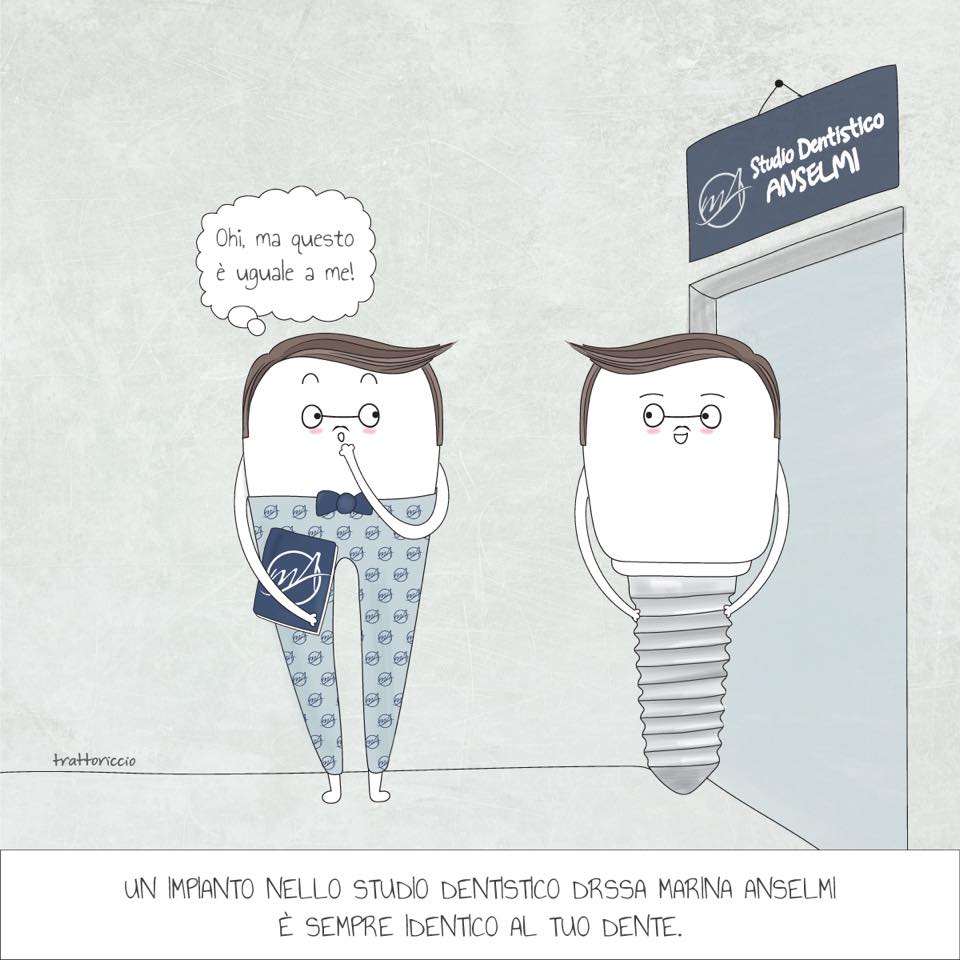
Implants are artificial roots on which we can build fixed teeth.
Traditional implantology involved a procedure that involved lifting the gum to expose the bone where the implant could be placed. Today, guided implantology allows for the procedure to be performed without a scalpel.
How does it work?
A 3D study is performed with special software that reproduces the anatomy of the mouth with extreme precision.
A smile scan is performed with an oral scanner, obtaining an optical impression that is a three-dimensional reproduction of the mouth with teeth and gums.
The implants are inserted virtually on the reproduction of the mouth, planning where to place the implant, what shape, size and depth to use to obtain the best possible result.
Just like an architectural design, this allows us to visualize the final result and create a surgical template that guides implant placement in a manner that is absolutely faithful to the project.
What are the advantages of this method?
With 3D design we have a lot of anatomical information available: the course of nerves, arteries, shape and volume of the bone.
The surgical guide reduces execution times and makes surgery simpler, allowing intervention without having to detach the gum, reducing post-operative discomfort and healing times.

Such a simplified and therefore faster procedure is especially suitable for elderly patients who often have pathologies that limit the indication for traditional interventions.
If you would like more information on this procedure, please fill out the contact form.


